$30.3
$53.33
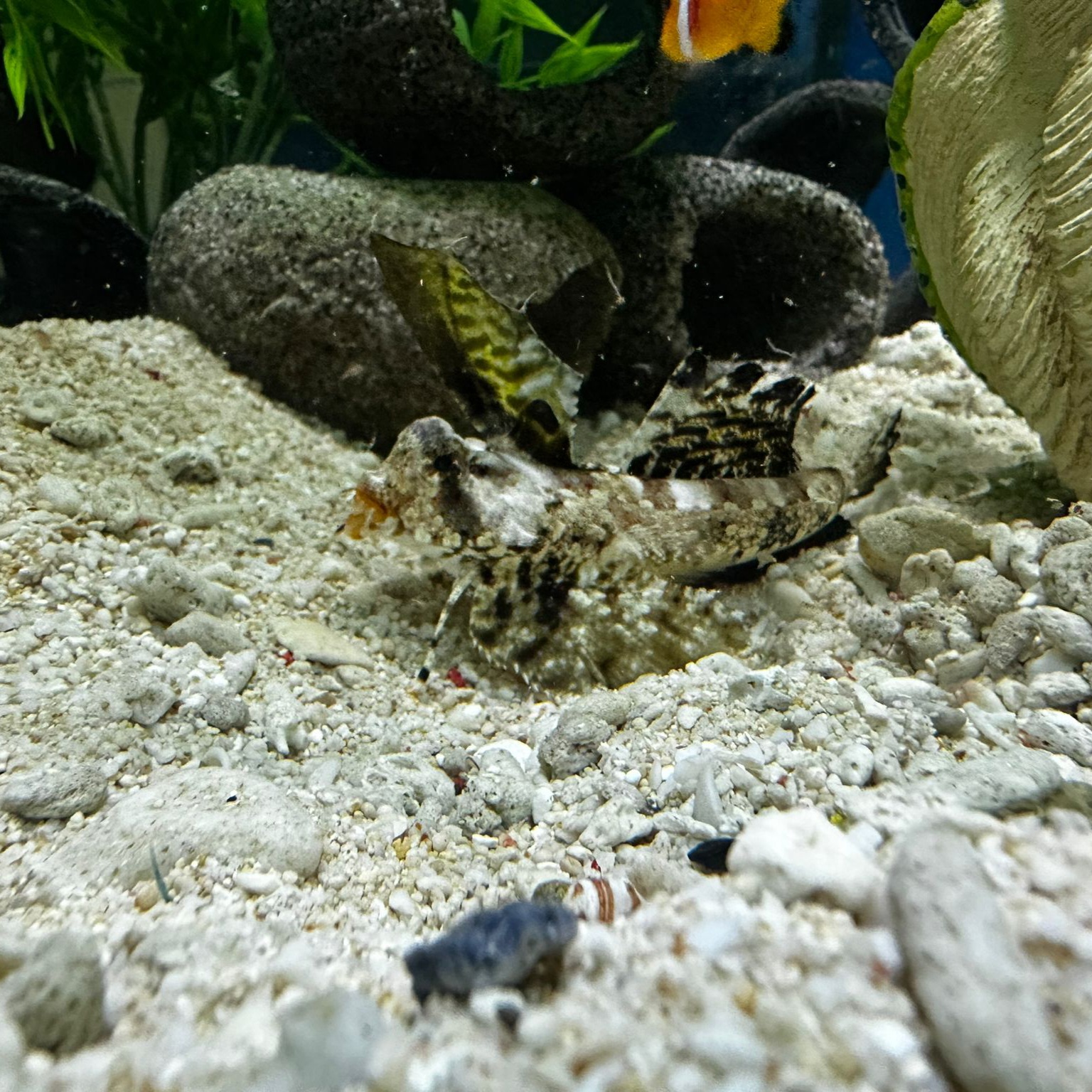
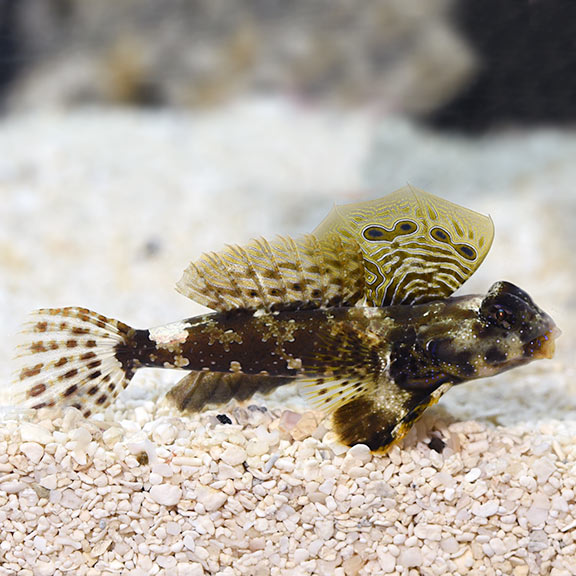
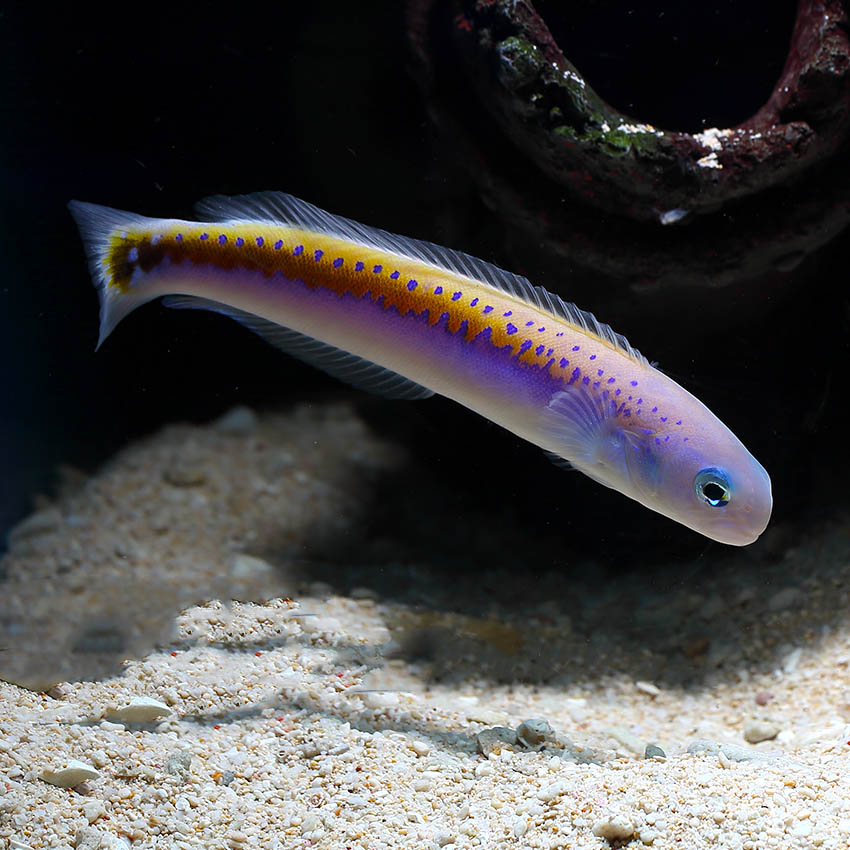
The Finger Gurnard Dragonet, scientifically known as Dactylopus dactylopus, boasts a striking appearance which will almost certainly leave a lasting impression. This fish typically reaches a maximum size of about 3 inches (7.6 centimetres). Its body is elongated and adorned with beautiful, mottled patterns. The dorsal fin stands tall and resembles a sail, while the pectoral fins are enlarged, contributing to its unique appearance. This fish possesses finger like sensory organs under their pectoral fins. As a result, the fish appears to scuttle about. Taxonomy and Identifying Features: Belonging to the family Callionymidae, Finger Gurnard Dragonets are closely related to other dragonets. The genus Dactylopus includes species with elongated bodies, large pectoral fins, and a distinctive dorsal fin resembling a sail. The scientific name “Dactylopus” is derived from the Greek words “dactylus,” meaning “finger,” and “pous,” meaning “foot.” This name alludes to their finger-like appendages. Natural Habitat: Gurnard Dragonets inhabit coral reefs and rocky substrates in the Indo-Pacific region. They thrive in clear, warm waters with temperatures ranging from 75 to 82°F (24 to 28°C). Their natural habitat is a kaleidoscope of colours, teeming with various corals and marine life. It features an array of hiding spots amidst coral crevices and rocky formations, providing a safe haven for these small, colourful fish. Keeping Finger Gurnard Dragonets Healthy and Care Difficulty: Maintaining the health of Finger Gurnard Dragonets requires intermediate-level care. They are sensitive to fluctuations in water parameters, so a stable environment is crucial. Provide a well-established aquarium with pristine water quality. A tank size of at least 30 gallons (113 litres) is suitable for a single fish or a male and female pair. These dragonets can be territorial, so ensure ample hiding places. Maintain water temperature between 75-82°F (24-28°C) and a pH level of 8.1-8.4. Special Requirements and Feeding: Gurnard Dragonets have specific dietary needs. They are carnivorous and primarily feed on small crustaceans and invertebrates. To ensure their well-being, offer a varied diet that includes live or frozen foods such as brine shrimp, Mysis shrimp, and copepods. Additionally, consider providing a sandy substrate in the aquarium, as Gurnard Dragonets may sift through the sand in search of small prey. How Many Should I Keep: In most cases, it is advisable to keep a single Finger Gurnard Dragonet in a tank, as they can be territorial and aggressive towards conspecifics. If you wish to keep a pair, ensure a spacious aquarium with numerous hiding spots to minimize potential conflicts. To avoid overstocking, adhere to the general guideline of one fish per 30 gallons (113 litres) of water. Lighting Preference: Finger Gurnard Dragonets do not have specific lighting requirements. They adapt well to various lighting conditions found in reef aquariums, ranging from low to high light. Suitable Tank Mates: Gurnard Dragonets are generally peaceful but can be threatened by larger or more aggressive tank mates. Ideal companions include other small, peaceful fish that share similar water parameter requirements. Compatible tank mates may include clownfish, gobies, and other reef-safe species. Avoid housing them with predatory or territorial fish that might stress or harm the Gurnard Dragonet. Reproduction in the Wild: In the wild, Finger Gurnard Dragonets, scientifically known as Dactylopus dactylopus, engage in unique reproductive behaviours. They typically reproduce through external fertilization, where females release their eggs and males release sperm into the water column. The fertilized eggs then drift in the currents, eventually hatching into larvae. The specific courtship and spawning behaviours of this species have been observed to vary in different regions of their natural habitat. Breeding Dactylopus dactylopus: Breeding Gurnard Dragonets in a home aquarium can be a rewarding but challenging endeavour. To increase the chances of successful breeding, follow these steps: 1) Set Up: Begin by setting up a dedicated breeding tank, typically a smaller aquarium with a capacity of 10-20 gallons (38-76 litres). Maintain stable water conditions, including a temperature of around 78-82°F (25-28°C), a pH level of 8.1-8.4, and salinity of 1.022-1.025. Provide the tank with ample hiding spots and live rock for the dragonets to lay their eggs. 2) Courtship/Spawning: Replicating the courtship and spawning behaviour of Finger Gurnard Dragonets can be challenging. In the wild, courtship rituals involve intricate displays and dances. Males exhibit vivid colours and extended fins to attract females. While simulating this in captivity is difficult, providing a well-maintained tank with proper water conditions is essential. 3) Rearing: Once successful spawning occurs, the challenge continues with rearing the larvae. Dragonet larvae are tiny and require specific care. They are usually fed with live, small zooplankton, such as rotifers and copepods. The larvae are extremely delicate and sensitive to water quality, so meticulous attention to water parameters and cleanliness is vital for their survival. Sexual Dimorphism: Finger Gurnard Dragonets exhibit minimal sexual dimorphism. Both males and females share similar external appearances, making it challenging to distinguish between the sexes based on physical characteristics alone. This lack of distinct sexual dimorphism further complicates breeding efforts in captivity. Distribution: Finger Gurnard Dragonets, Dactylopus dactylopus, originate from the Indo-Pacific region. Their natural habitat encompasses a vast area that includes the waters of the Indian Ocean and the western Pacific Ocean. Within this range, they inhabit coral reefs, rocky substrates, and areas with abundant marine life. Summary: Finger Gurnard Dragonets, scientifically known as Dactylopus dactylopus, are intriguing marine fish with unique characteristics. Reproducing them in a home aquarium requires attention to water conditions and a commitment to providing suitable breeding environments. While they exhibit minimal sexual dimorphism, the challenge of breeding and rearing these dragonets is offset by the satisfaction of successfully nurturing these captivating creatures. Originating from the Indo-Pacific region, their distribution spans a wide range of waters, making them a fascinating addition to marine ecosystems.
Gobies, Blennies And Dragonets