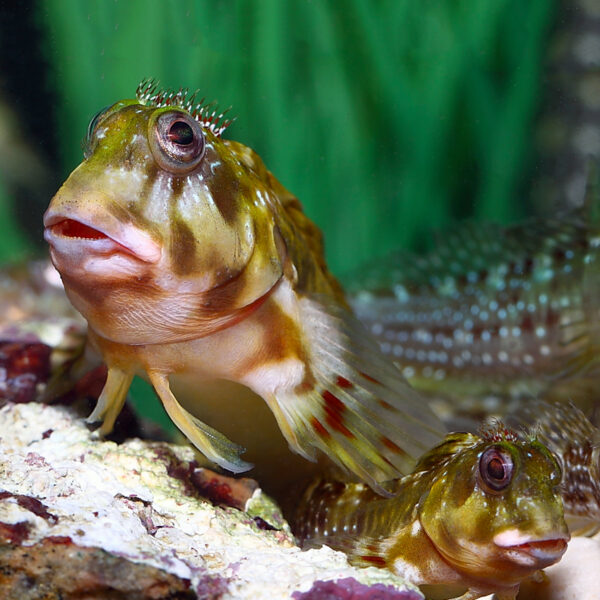
Molly Miller Blenny Tank Bred
The Tank Bred Molly Miller Blenny, scientifically known as Scartella cristata, is a petite marine fish with a maximum size of around 3.5 inches (9 centimetres). It possesses a slender, elongated body and is characterised by a distinctive, crest-like dorsal fin, from which it derives its specific epithet “cristata.” Taxonomy and Identifying Features Belonging to the family Blenniidae, the Tank Bred Molly Miller Blenny shares its lineage with various blenny species. Its genus, Scartella, is known for its members’ unique dorsal crests, which aid in differentiating them from other blennies. The genus name “Scartella” is derived from the Latin word “scartus,” meaning “scraper,” which reflects the blenny’s habit of grazing on algae and detritus. Natural Habitat The natural habitat of the Molly Miller Blenny primarily consists of rocky crevices and coral reefs in the warm waters of the Western Atlantic Ocean. These habitats are often characterised by the presence of various nooks and crannies, where the Molly Miller Blenny seeks refuge and hunts for small invertebrates. Keeping Tank Bred Molly Miller Blenny Healthy: The care level for Tank Bred Molly Miller Blennies is generally considered moderate, making them suitable for intermediate to experienced aquarists. Their small size and peaceful temperament make them an excellent addition to a marine aquarium. To ensure their health and well-being, maintain stable water parameters, including a temperature range of 72-78°F (22-26°C) and a salinity level between 1.020-1.025. Provide ample hiding spots within the tank and a sandy substrate for burrowing. Special Requirements and Feeding Molly Miller Blennies are omnivores with a preference for algae and small crustaceans. To meet their dietary needs, offer a varied diet that includes high-quality flake food, frozen foods like brine shrimp and mysis shrimp, and algae-based preparations. Maintaining a well-established, mature aquarium with natural algae growth can also help supplement their diet. Regular feedings should be conducted at least once a day to ensure their nutritional requirements are met. How Many Should I Keep When it comes to Tank Bred Molly Miller Blennies, a general rule of thumb is to keep one individual per tank. Although they are relatively peaceful and can be kept in small groups, providing each blenny with its territory and sufficient hiding spaces is crucial to prevent territorial disputes. Lighting Preference Molly Miller Blennies do not have specific lighting preferences. They can adapt to various lighting conditions, ranging from low to high. However, providing moderate lighting with a natural day-night cycle is recommended to promote a healthy environment for both the blenny and the coral and algae within the aquarium. Suitable Tank Mates Tank Bred Molly Miller Blennies are generally peaceful and can coexist with a variety of tank mates, such as other peaceful fish, small invertebrates, and some species of coral. However, caution is advisable when housing them with aggressive or larger species that may pose a threat. Ideal tank mates include gobies, small wrasses, and other non-aggressive reef inhabitants. Regular observation of their interactions is essential to ensure compatibility and minimize any potential conflicts in the aquarium. Reproduction in the Wild In the wild, Molly Miller Blennies (Scartella cristata) engage in reproductive activities where they lay their eggs on the ocean floor, often in rocky crevices or sheltered areas. The male plays a significant role in guarding the nest and protecting the eggs until they hatch. After hatching, the young blennies embark on a planktonic stage, drifting with ocean currents, before eventually settling in suitable habitats. Breeding Scartella cristata: 1) Set Up Breeding Molly Miller Blennies in captivity requires a dedicated setup. Start with a well-established marine aquarium, ideally around 30 gallons in size (imperial: approximately 25 gallons), equipped with a stable temperature of 72-78°F (22-26°C) and a salinity level between 1.020-1.025. Create hiding spots using live rock and provide a sandy substrate for burrowing. Ensure pristine water quality with a reliable filtration system. 2) Courtship/Spawning To initiate courtship, introduce a compatible male and female Molly Miller Blenny to the breeding tank. The male will engage in courtship behaviour, which includes fin displays and chasing. Successful courtship often leads to the female laying adhesive eggs on the substrate. The male diligently guards and fans the eggs with his fins to ensure proper oxygenation. 3) Rearing Once the eggs hatch, the young blennies enter a larval stage. To increase their chances of survival, transfer the larvae to a separate rearing tank with gentle water movement and aeration. Offer them appropriate larval foods, such as rotifers and copepods. As they grow, transition their diet to finely crushed dry foods and copepods. Careful monitoring and maintenance are crucial for their development. Sexual Dimorphism Sexual dimorphism in Tank Bred Molly Miller Blennies is subtle, with both males and females possessing similar body shapes and colours. Distinguishing between the two primarily involves observing their behaviour during courtship and breeding. Males exhibit more active and dominant behaviour during these periods, while females are typically less assertive. Distribution Molly Miller Blennies (Scartella cristata) are native to the Western Atlantic Ocean, where they can be found along the coasts of North and South America. Their natural range extends from the south-eastern United States to the Caribbean and as far south as Brazil. These blennies thrive in rocky crevices and coral reefs within this geographic area, where they inhabit the various nooks and crannies of these underwater landscapes. Summary Breeding Molly Miller Blennies, or Scartella cristata, in captivity involves careful preparation and attention to water parameters. Their reproduction in the wild is characterized by adhesive egg laying and diligent male guarding. Sexual dimorphism is subtle, with behavioural differences during courtship. These captivating blennies are native to the Western Atlantic Ocean, found in rocky crevices and coral reefs. Captive breeding efforts contribute to the conservation of this fascinating marine species.
Related products
-

-
Sale!

-