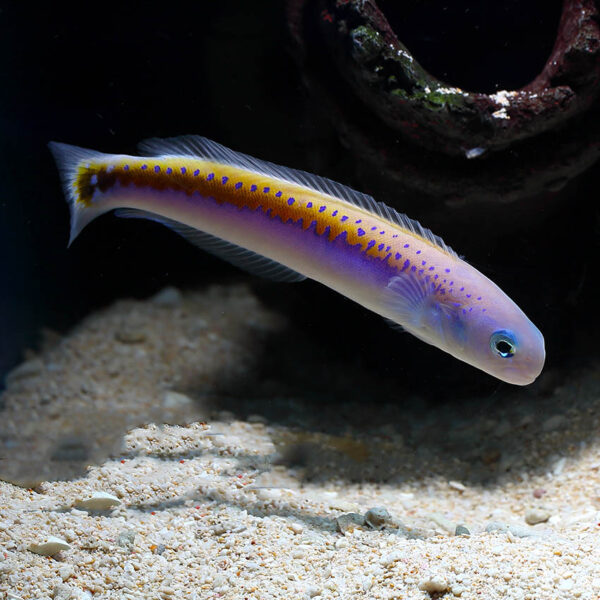
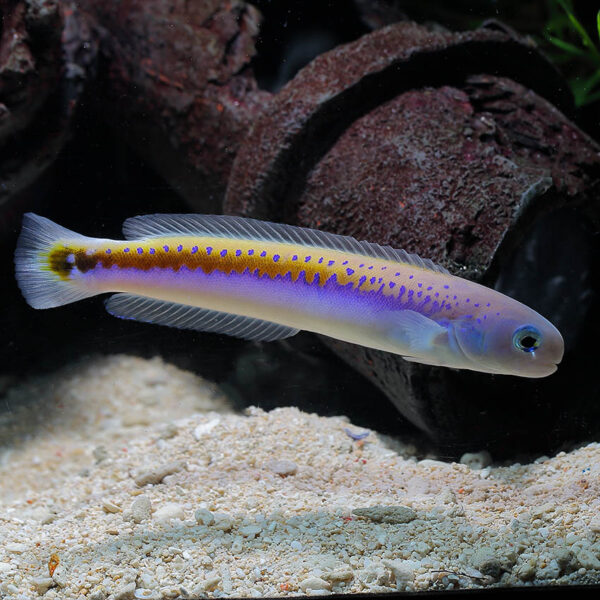
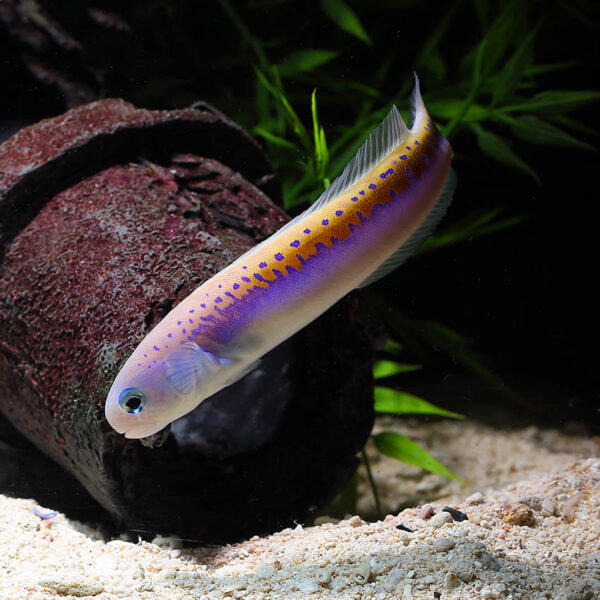
Oreni Tilefish (Hoplolatilus oreni)
The Oreni Tilefish, Hoplolatilus oreni, showcases a sleek, elongated body adorned with striking colours, including shades of yellow, orange, and blue. Reaching a maximum size of around 5 inches (13 centimetres), this species boasts a distinct diamond-shaped body with intricate patterns, and its dorsal fin spans the length of its body. Their vibrant appearance makes them an attractive addition to marine aquariums. Taxonomy Belonging to the family Malacanthidae, the Oreni Tilefish shares its genus, Hoplolatilus, with several other tilefish species. Its closest relatives within the family include other tilefish species like Hoplolatilus fourmanoiri. The genus name, Hoplolatilus, is derived from Greek, with “hoplon” meaning armor and “latilus” indicating broad, perhaps alluding to the fish’s flattened, shield-like appearance. The specific epithet, oreni, is likely named after a geographical location or a person but lacks clear etymological documentation. Natural Habitat This species inhabits sandy bottoms and coral reefs in tropical marine environments. Their habitat often includes areas with caves, crevices, and burrows, providing shelter and protection. The surroundings are typically adorned with coral formations and scattered rocks, creating a diverse and complex ecosystem. Keeping Oreni Tilefish Healthy Maintaining the health of Oreni Tilefish requires a moderate care level and is considered moderately difficult due to their specific needs. A tank of at least 50 gallons with stable water parameters is necessary. Water temperature should be kept between 72-78°F (22-26°C), pH level between 8.1-8.4, and salinity around 1.020-1.025. Regular water changes and a well-maintained environment are crucial for their well-being. Special Requirements and Feeding Oreni Tilefish are carnivorous and require a varied diet comprising a mix of live and frozen foods such as brine shrimp, mysis shrimp, and enriched preparations. Providing multiple feedings per day replicates their natural feeding habits and sustains their health in captivity. How Many Should I Keep These fish are best kept singly or in mated pairs due to their territorial nature and tendency to establish dominance. One Oreni Tilefish per tank is recommended to minimise conflicts. Lighting Preference They thrive under moderate lighting conditions that mimic their natural habitat. Adequate lighting encourages natural behaviours and enhances their vibrant colouration. Suitable Tank Mates Peaceful tank mates such as other small, non-aggressive fish and invertebrates can cohabit with the Oreni Tilefish. Avoid housing them with aggressive or larger species that may intimidate or outcompete them for resources. Reproduction in the Wild The reproductive behaviour of the Oreni Tilefish, Hoplolatilus oreni, in the wild is not extensively documented. Similar to other tilefish species, they are presumed to be egg layers that partake in broadcast spawning. These fish likely release eggs and sperm into the water column during spawning events, where fertilisation occurs externally. The resulting larvae drift with ocean currents until they find suitable habitats to settle. Sexual Dimorphism Sexual dimorphism in Oreni Tilefish is not distinctly evident, as both sexes generally display similar physical characteristics. Distribution The Oreni Tilefish originates from the Western Pacific Ocean, including areas around Indonesia, Papua New Guinea, and the Philippines. They inhabit sandy bottoms and coral reefs within tropical marine regions. Summary The Oreni Tilefish, scientifically termed Hoplolatilus oreni, is an aesthetically appealing species found in the Western Pacific Ocean. Breeding these fish in captivity is challenging, requiring controlled tank environments and specific care during courtship, spawning, and larval rearing stages. Sexual dimorphism is not prominent, and they originate from tropical marine habitats with sandy bottoms and coral reefs. Their reproductive behaviour in the wild involves broadcast spawning, with larvae drifting in ocean currents until finding suitable settling areas.
Related products
-

-
Sale!

-