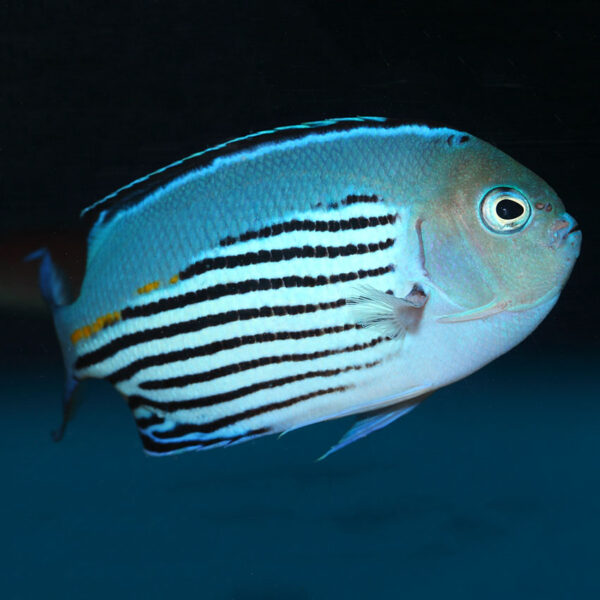
Watanabie Angelfish Male
The Male Watanabie Angelfish, Genicanthus watanabei, Can also be called Blackedged or Pinstriped Angel. This gorgeous Marine fish has a vibrant appearance, characterised by a predominantly bluish-purple body adorned with intricate patterning. It possesses elongated dorsal and anal fins, with a maximum size reaching around 6 inches (15 centimetres). The male displays striking colouration with yellow and blue hues, presenting a visually captivating sight. Taxonomy: Belonging to the Pomacanthidae family, Genicanthus watanabei shares taxonomy with other members of the Genicanthus genus, exhibiting similarities in body structure and behaviour. The genus name “Genicanthus” is derived from Greek, where “genys” means chin and “akantha” refers to spine or thorn. Natural Habitat: The natural habitat of the Male Watanabie Angelfish comprises steep reef slopes and drop-offs in tropical marine environments. It favours areas with strong currents and ample rocky formations, seeking refuge amidst coral crevices and overhangs. These habitats offer both shelter and access to abundant planktonic food sources. Have a look at our WYSIWYG selection! (What You See Is What You Get) We are constantly adding fish and coral to this section of the website. Here you can view and buy the actual fish or coral in the pictures and/or videos provided. Keeping Watanabie Angelfish Healthy: Maintaining the health of the Watanabie Angelfish involves a moderate care level with moderate difficulty. Ensure a well-established tank with stable water parameters, including a temperature range between 72°F to 78°F (22°C to 26°C), pH of 8.1 to 8.4, and a specific gravity of 1.020 to 1.025. Special Requirements and Feeding: These angelfish have specific dietary needs, preferring a diet rich in zooplankton and algae-based foods. Offer a varied diet consisting of quality flakes, pellets, and frozen or live foods such as brine shrimp and mysis shrimp. How Many Should I Keep: It’s advisable to keep a single male Watanabie Angelfish in a tank due to their territorial behaviour and potential aggression towards conspecifics. Lighting Preference: Moderate to strong lighting is preferable, replicating their natural reef environment. Suitable Tank Mates: Compatible tank mates include peaceful species like smaller reef fish and invertebrates. Avoid housing them with larger, aggressive fish that may intimidate or harass them. Angelfish in general are not considered reef safe due to the risk of them eating coral. Dwarf Angels, by the large, are considered less of a risk but do still have the potential to nip corals. The risk can vary depending on a few factors. If you want specific advice for your set up, feel free to call for advice. Reproduction in the Wild: The Watanabie Angelfish, specifically the male of the species Genicanthus watanabei, reproduces through pelagic spawning in its natural habitat. During this process, females release eggs into the water column, followed by males fertilising them externally. The fertilised eggs then drift in the ocean currents until they hatch into larvae. Breeding Genicanthus watanabei: Set-up: Breeding Watanabie Angelfish in captivity requires a well-established tank with stable water conditions closely resembling their natural environment. Provide ample hiding spots and rocky formations similar to their habitat. Courtship/Spawning: Courtship behaviours involve intricate dances and displays between male and female pairs. Spawning occurs when the female releases eggs, and the male fertilises them externally in open water. These fertilised eggs then float in the water column. Rearing: Once the eggs are fertilised, carefully transfer them to a separate rearing tank with controlled lighting and water quality. Larvae hatch within a specific timeframe and require microscopic food sources such as rotifers and copepods initially. Gradually introduce larger food sources as they grow. Sexual Dimorphism: Sexual dimorphism in Watanabie Angelfish is evident through distinct differences in colouration and fin morphology between males and females. Males typically exhibit more vibrant colours and elongated fins compared to females. Distribution: Genicanthus watanabei, the Watanabie Angelfish, originates from the Western Pacific Ocean, specifically found around Japan and neighbouring areas. Their distribution spans varying depths of coral reefs within this region. Summary: The male Watanabie Angelfish, scientifically known as Genicanthus watanabei, reproduces through pelagic spawning in its natural habitat. Breeding them in captivity requires attention to tank setup, courtship behaviours, and the rearing process for larvae. Sexual dimorphism is evident through differences in colouration and fin structure. They primarily inhabit the Western Pacific Ocean around Japan and are found in various depths of coral reefs. Successful breeding in captivity requires mimicking their natural environment and careful attention to larval feeding and rearing.
Related products
-
-
Sale!
-