$16.2
$24.95
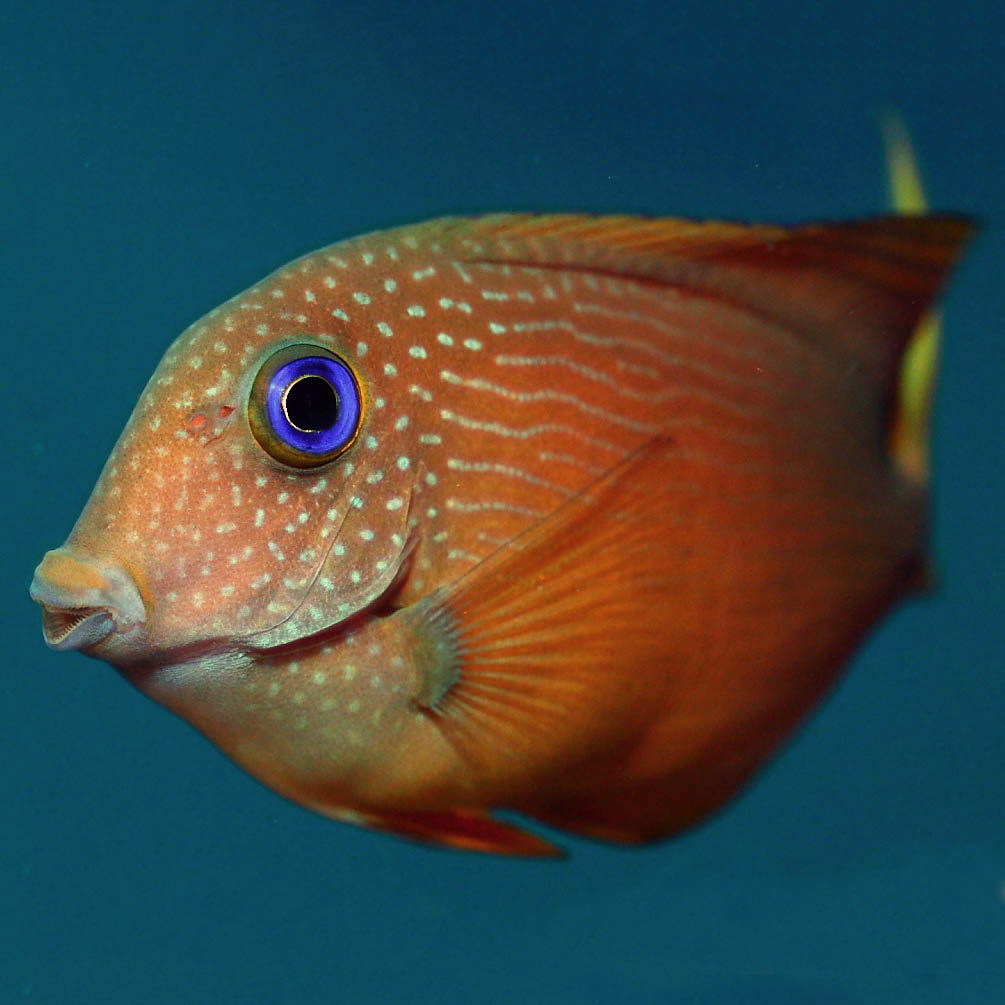
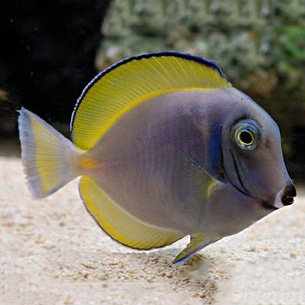
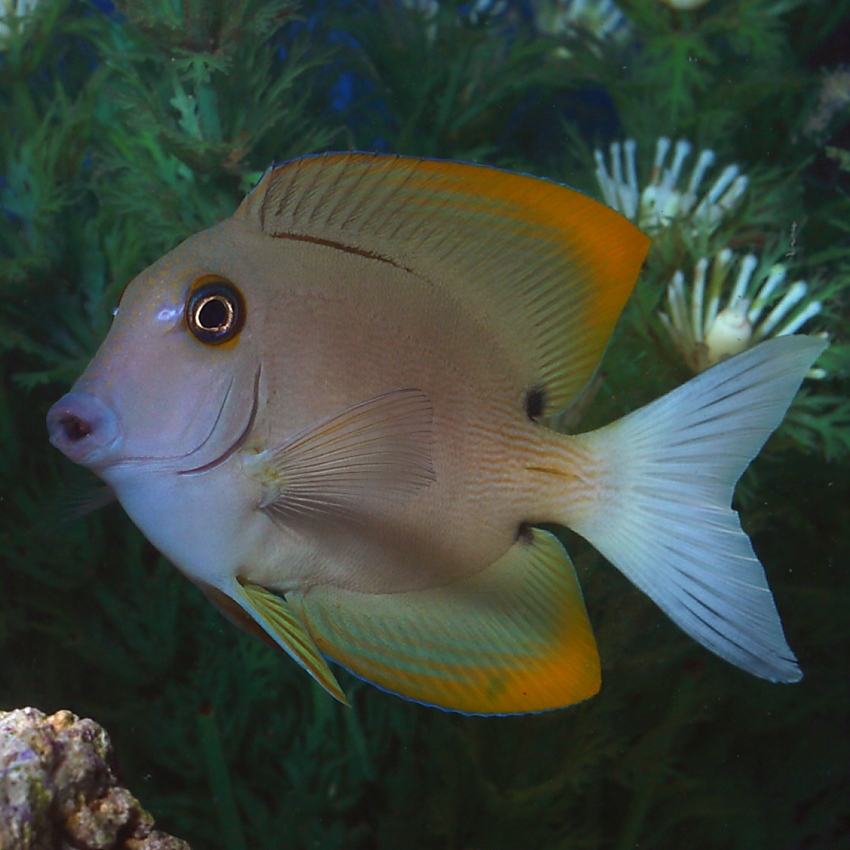
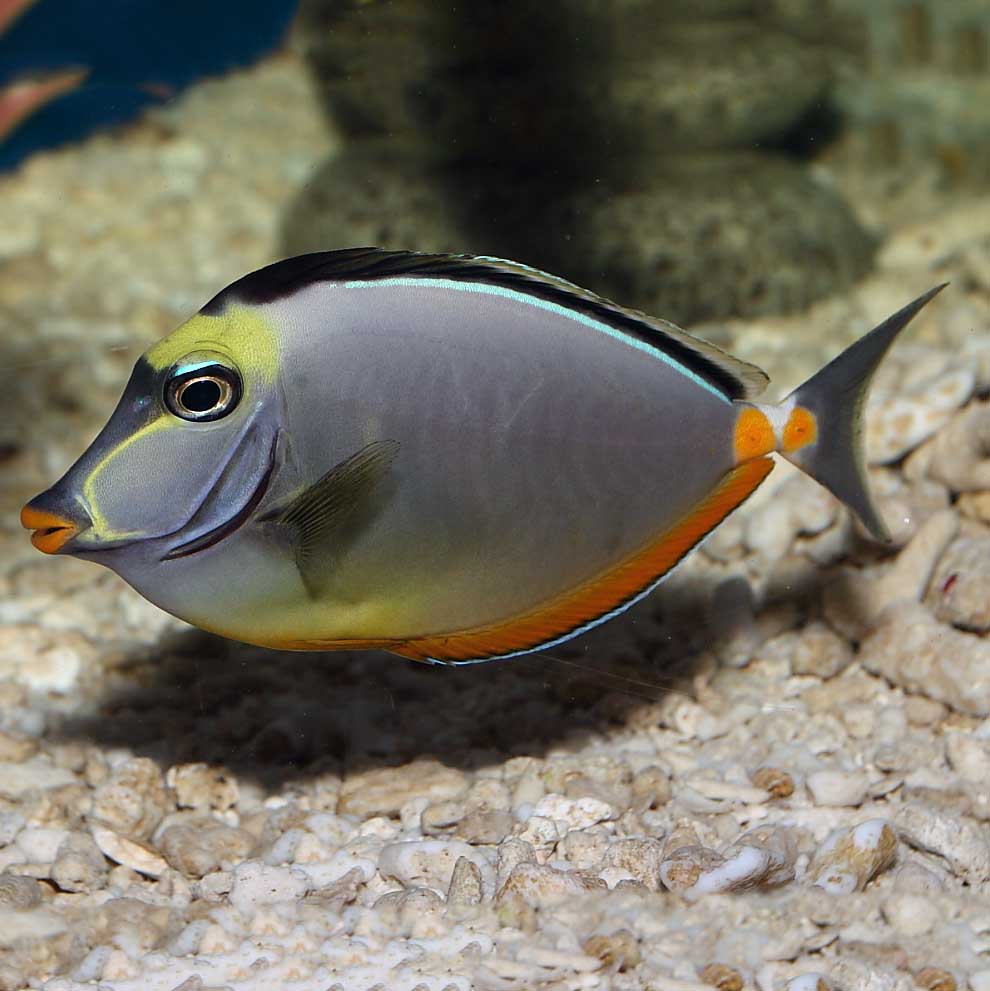
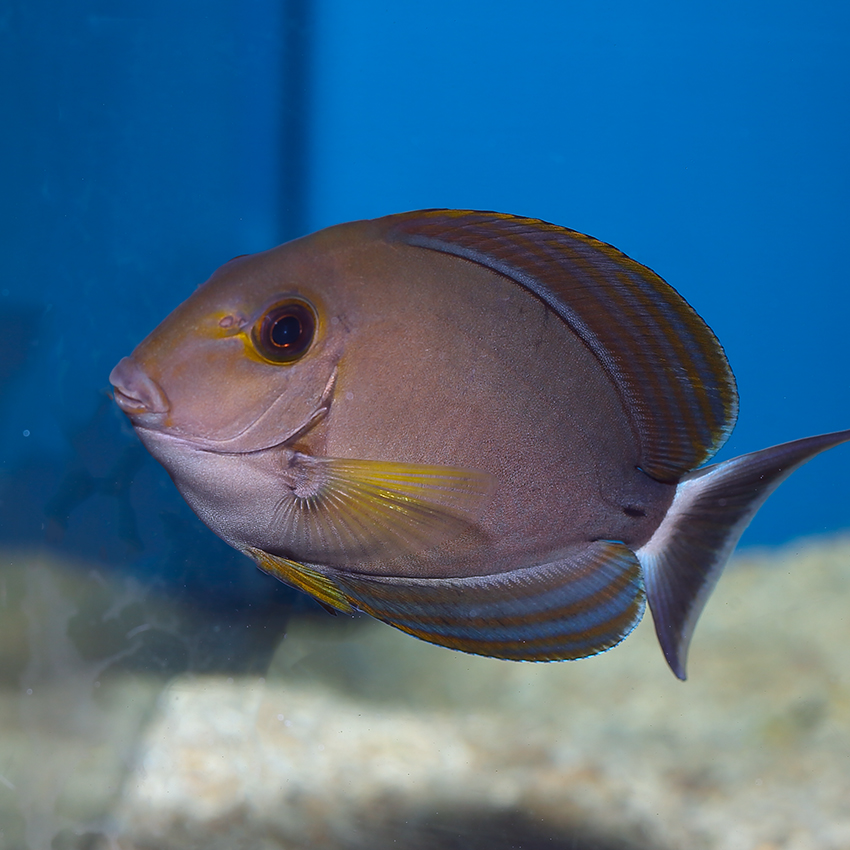
Red Stripe Mimic Tangs, Acanthurus tristis, also go by the name Indian Ocean Mimic Surgeonfish. These Tangs are a type of ray finned fish that belong to the Acanthuridae family. This family also includes Sawtails and Unicornfish. The defining characteristic for the Acanthuridae family, is the presence of scalpels or spines on both sides of the caudal peduncle. These are used for defence and are usually brightly coloured to act as a deterrent. For Red Stripe Mimic Tangs however, this is not really the case. They are visible but not drawn attention too. Red Stripe Mimic Tangs also belong to the subfamily Acanthurinae. Which means these fish have one spine on each side. These spines are set into a groove and are erected by curving the tail. In contrast, the other two subfamilies own fixed spines. Unicornfish, or Nasos, have one or more hooked spine, while Sawtails develop a series of spines with age. Sometimes up to seven. Sawtails are made up of the genus Prionurus only and not seen in trade. Red Stripe Mimic Tang, Acanthurus tristis, Ecology. These fish appear in the Indian Ocean. They live around Indonesia and the Andaman Sea. As well as around Chagos Archipelago and the Maldives. Red Stripe Mimic Tangs live on seaward or rocky reefs, and sometimes over sandy areas. When young, these fish mimic Centropyge eibli. On the reef, Red Stripe Mimic Tangs graze on algae. Like many Tangs, these fish can be helpful for controlling algae growth. Left unchecked, algae could outcompete slower growing coral species for space and light. Their help can be more pronounced on shallower reefs that capture more sunlight. Indian Ocean Mimic Surgeonfish In the Aquarium. It is important to have plenty of nooks or crannies in order to imitate the natural environment. This will help your Red Stripe Mimic Tang establish its own territory. Aquaroche and Aquaroche shelves can be helpful for this. Hobbyists should also think about using a jump guard to stop any loses. Red Stripe Mimic Tangs do best when fed a varied diet. Here they are eating a good quality pellet and flake food. Our Tangs are also offered seaweed, that can be secured to the side of the tank with clips. They will happily eat enriched frozen: mysis shrimp and brine shrimp and krill, in the case of the larger fish. We enrich all our frozen food with garlic and vitamins. These are imperative for keeping fish healthy and increasing longevity. By providing the fish with the nutrition that is otherwise lost in frozen food, these additives support the tangs immune system and helps ward off white spot. In addition, Red Stripe Mimic Tangs will also eat live foods, such as copepods and amphipods, that can be cultivated in attached refugium. Our Tangs are adapted to aquarium life before being offered for sale. So they are eating dry food and/or frozen food when they leave us. Tangs can be kept alone or in groups. If considering the latter, feel free to give us a call to discuss further. Hobbyists can keep multiple tangs together, although we encourage you seek advice if you are unsure or have questions. Receiving Red Stripe Mimic Tang via specialist licensed livestock courier. When it comes to showing distress, some fish don’t let on, while others wear their heart on their sleeves. The Red Stripe Mimic Tang, is one of those more dramatic fish. Here at the Abyss, we pride ourselves on our reputation for providing healthy livestock, that are well accustomed to life in the home aquarium. We have a very rigorous process for preparing our livestock for sale and a thorough packing process to help ensure our customers receive fish to be proud of. When it comes to shipping out, no expense is spared to ensure the safety and comfort of our stock while they are on the way to you. Even so, It is important to remember that, being brought home the same day from your local fish store, is a very different experience from being sealed in complete and true darkness and travelling overnight. For example, the simple action of lifting your new pet into a lit environment, from the pitch black can be a shock to them. Remember, they don’t have eye lids to shield themselves. As a result, it is entirely likely you may see some species demonstrate odd behaviour or strange patterns. These are all natural behaviours for this fish. Either by being basic responses (ie, breathing faster due to increased heart rate), or an adaptation to help aid survival in the wild (ie, colour change to help camouflage, showing off defensive attributes by way of warning). There are some people that may find this alarming. Especially if new to receiving fish via a specialized licensed courier service, or are new to Red Stripe Mimic Tangs, so below are somethings you may encounter on delivery. If you see your Red Stripe Mimic Tang: Heavy breathing, Dorsal spines erected, lying on its side, lying on the side with tail curled, displaying darker colours, displaying a mottled, or striped pattern, Do not panic! Follow the instructions in the guarantee provided. Get in touch if you are concerned. If you give your Red Stripe Mimic Tang the space it needs to settle in and adjust, It will be back to its normal self soon.
Tangs