$23.78
$32.34
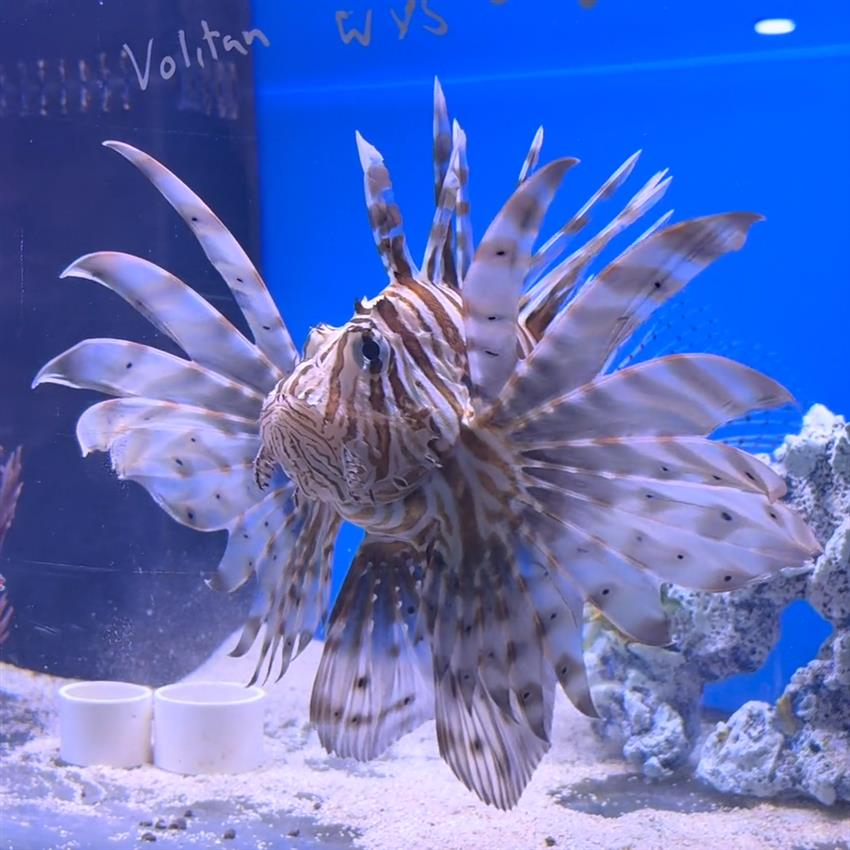
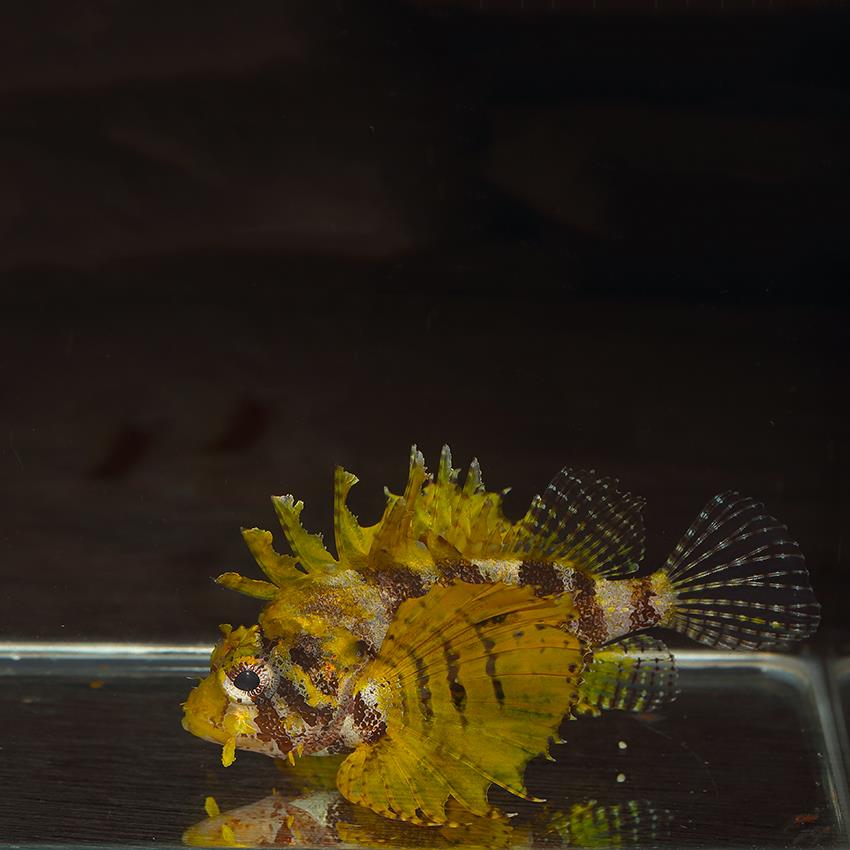
The Yellow Fuzzy Dwarf Lionfish, Dendrochirus brachypterus, are also named Shortfin Lionfish. This is a captivating fish with a captivating appearance. It is a relatively small lionfish species, reaching a maximum size of around 6 inches (15 cm) in length. This species features elongated, feathery pectoral fins, which give it a fuzzy or frilly appearance. Its body is adorned with dark stripes, creating a striking contrast against the yellow body. Most Fuzzy Dwarf Lionfish in trade are red/orange in colour but the Yellow Fuzzy Dwarf Lionfish, is a hard to find variant within the species. Have a look at our WYSIWYG selection! (What You See Is What You Get) We are constantly adding fish and coral to this section of the website. Here you can view and buy the actual fish or coral in the pictures and/or videos provided. These fish are venomous so it is best to exercise caution when handling. Taxonomy Dendrochirus brachypterus belongs to the genus Dendrochirus, which is part of the family Scorpaenidae. The Scorpaenidae family consists of numerous venomous fish species. The Fuzzy Dwarf Lionfish shares its genus with other lionfish species, such as the Zebra Lionfish (Dendrochirus zebra) and the Antennata Lionfish (Dendrochirus antennatus). Its closest relatives are the other members within the same genus. The scientific name, Dendrochirus brachypterus, has an etymology rooted in Greek. “Dendrochirus” translates to “tree hand” and refers to the fish’s frilly pectoral fins resembling tree branches. “Brachypterus” means “short-winged” and alludes to the species’ relatively short dorsal and anal fins. Natural Habitat In its natural habitat, the Yellow Fuzzy Dwarf Lionfish typically inhabits coral reefs and rocky areas. It seeks shelter among crevices, caves, and coral formations during the day. These environments provide the fish with suitable hiding spots to camouflage itself and wait for unsuspecting prey. The lionfish’s colours and patterns blend well with its surroundings, enhancing its chances of successful hunting. Keeping the Yellow Fuzzy Dwarf Lionfish Healthy: Caring for the Yellow Fuzzy Dwarf Lionfish requires attention to detail due to its specific needs. This species is considered moderately challenging to care for. It thrives in aquariums with stable water parameters and high water quality. The water temperature should be maintained between 75°F and 82°F (24°C to 28°C), and the pH level should be kept within a range of 8.1 to 8.4. Regular water testing and appropriate filtration are crucial for their well-being. Special Requirements and Feeding The Yellow Fuzzy Dwarf Lionfish is a carnivorous predator that feeds on small fish and crustaceans in the wild. In an aquarium setting, it should be offered a varied diet consisting of meaty foods, such as live or frozen shrimp, fish, and crustaceans. It is important to provide them with appropriately sized prey. Regular feeding and a balanced diet are essential for their overall health and vitality. How Many Should I Keep? Due to their solitary nature, it is recommended to keep only one Yellow Fuzzy Dwarf Lionfish in a tank unless you have a considerably large aquarium with ample hiding places. These lionfish are territorial and may exhibit aggression towards conspecifics (members of the same species). Ensuring adequate space and territory for each individual is crucial to minimize stress and aggression. Hunting Method The Yellow Fuzzy Dwarf Lionfish is an ambush predator. It patiently waits for its prey to swim by, using its frilly pectoral fins to disguise itself among coral or rocky structures. Once within striking distance, it rapidly extends its mouth and engulfs the prey, aided by its expandable stomach. This hunting strategy allows the lionfish to capture a wide range of small fish and invertebrates. Lighting Preference The Yellow Fuzzy Dwarf Lionfish prefers moderate to low lighting conditions Suitable Tank Mates When selecting tank mates for the Yellow Fuzzy Dwarf Lionfish, caution must be exercised. They may view smaller fish as potential prey, leading to aggression or predation. It is advisable to choose tank mates that are larger and too large to be considered prey. Compatible tank mates may include other larger predatory fish, such as groupers or larger angelfish. However, it is essential to monitor their behaviour closely to ensure compatibility and minimize aggression within the tank. Reproduction in the Wild In the wild, the Yellow Fuzzy Dwarf Lionfish, scientifically known as Dendrochirus brachypterus, reproduces through a process called spawning. Spawning refers to the release of eggs and sperm into the water column, where fertilization takes place externally. Lionfish, including the Yellow Fuzzy Dwarf Lionfish, exhibit a complex reproductive behaviour that involves courtship rituals and subsequent care for the eggs and offspring. Breeding Dendrochirus brachypterus Breeding the Yellow Fuzzy Dwarf Lionfish in captivity can be a rewarding but challenging endeavour. Here is a detailed overview of the breeding process: Set up To initiate breeding, a separate breeding tank should be set up. The tank should provide appropriate hiding places and structures for the fish to lay their eggs and for the subsequent protection of the eggs and fry. Water quality parameters, including temperature, salinity, pH, and filtration, should be closely monitored, and maintained within optimal ranges suitable for the species. Courtship/Spawning Courtship and spawning in the Yellow Fuzzy Dwarf Lionfish typically begin with elaborate courtship displays. The male lionfish initiates the courtship process by displaying vibrant colours, erecting its dorsal fin, and performing intricate swimming patterns. The male then entices the female towards a suitable nesting site. During spawning, the female releases a mass of eggs into the water, while the male simultaneously releases a cloud of sperm to fertilize the eggs. Fertilization occurs externally, and the fertilized eggs become buoyant, rising towards the water’s surface. Rearing After successful fertilization, the eggs float at the water’s surface, forming a gelatinous mass. It is essential to monitor and maintain optimal water conditions during this period to ensure the survival and development of the eggs. The eggs usually hatch within 48 to 72 hours, depending on water temperature. Once hatched, the fry, known as larvae, are transparent and have a yolk sac for nourishment. They will gradually develop and start to exhibit characteristics resembling miniature adult lionfish. Proper feeding and suitable food sizes are crucial during the rearing process to ensure the healthy growth and survival of the fry. Sexual Dimorphism Sexual dimorphism refers to the physical differences between males and females of a species. In the case of the Yellow Fuzzy Dwarf Lionfish, sexual dimorphism is not easily discernible based on external characteristics alone. Males and females generally have similar appearances, with both exhibiting the frilly fins and vibrant colouration characteristic of the species. Additional internal examination or DNA testing may be required to determine the sex of individual lionfish. Distribution The Yellow Fuzzy Dwarf Lionfish, Dendrochirus brachypterus, is naturally found in the Indo-Pacific region, specifically in the waters around the Maldives, Sri Lanka, and the Andaman Sea. While there may be captive-bred or line-bred strains of the Fuzzy Dwarf Lionfish available in the aquarium trade, the original wild fish originates from the aforementioned areas in the Indo-Pacific. Summary The Yellow Fuzzy Dwarf Lionfish, scientifically known as Dendrochirus brachypterus, exhibits fascinating reproductive behaviour in the wild and can be bred in captivity under suitable conditions. Through courtship rituals and the release of eggs and sperm into the water column, spawning occurs, leading to the development of fertilized eggs and subsequent hatching of fry. Proper set-up, monitoring of water parameters, and appropriate care during rearing are essential for the successful breeding of this captivating species. Please note that breeding lionfish can be a complex and demanding task that requires experience and knowledge. It is advisable to seek guidance from experts or consult specialized literature.
Eels,Groupers, Triggerfish & Venomous